ARC Raiders Boosting Ban Risk: Will You Get Banned in 2026?
Account-sharing boosts in ARC Raiders carry a real ban risk because Embark's ToS explicitly bans boosting and account sharing. Here's how to stay safe.
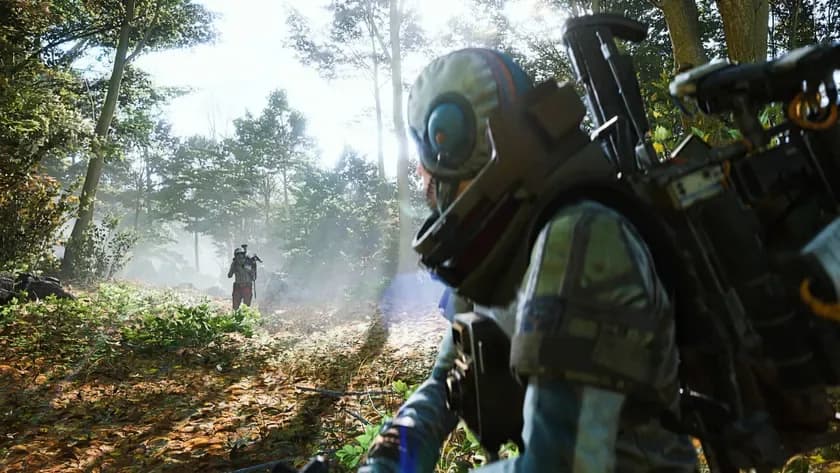
Short answer: yes, ARC Raiders boosting can get you banned — Embark's Terms of Service explicitly list "account boosting or farming" and "sharing or selling your account" as bannable offenses, so any service that logs into your account is breaking the rules. That doesn't mean every path to faster progress is a trap, but you need to understand exactly where the ban risk lives before you hand over anything.
I've run enough extraction shooters to know the pattern: the grind is brutal, someone offers a shortcut, and the fine print is where people get burned. Let's break down what's actually risky, what's safer, and how ARC Raiders' enforcement really works in 2026.
Can ARC Raiders boosting really get you banned?
Yes — and the risk is not hypothetical. Embark's own Ban and Enforcement Policy is blunt about it. Accounts can be banned for various reasons, such as using cheats, hacks, or third-party tools, attempting to bypass anti-cheat protections, exploiting bugs, account boosting or farming, sharing or selling your account, and trading in-game items for anything of value.
Read that list again. "Account boosting or farming" and "sharing or selling your account" are named directly. So the classic piloted boost — where a stranger logs into your account and plays for you — is a Code of Conduct violation on its face, regardless of whether the booster cheats.
On top of the ToS, Embark's detection is serious. Their anti-cheat stack combines kernel-level protection from Easy Anti-Cheat with detection capabilities powered by machine-learning models, trained on a constant flow of player telemetry. That ML layer is exactly the kind of thing that flags sudden changes in playstyle, login region, or skill — the fingerprints an account-sharing boost leaves behind.
Field note: In one Steam support case, a player was told their suspension was upheld because Embark's systems detected abnormal behavior inconsistent with normal gameplay, and the observed behaviour results in an unfair advantage over other players. "Abnormal behavior inconsistent with normal gameplay" is a phrase that should worry anyone considering a piloted boost.
How ARC Raiders' ban system actually works
Embark tightened enforcement hard in 2026, so knowing the ladder matters. Embark implemented a three-strike progressive ban system: for the first two offenses, cheaters are banned for 30 and 60 days respectively, and the third strike results in a permanent account ban.
But they didn't stop there. After Marathon's launch pressure, ARC Raiders clarified its anti-cheat capabilities and announced tighter restrictions — serious infractions now carry stricter consequences, with strong detections receiving permanent bans right off the bat, while others receive a temporary suspension and a single chance to correct the behavior.
Translation: not every violation gives you three lives anymore. A strong detection can permaban on the first hit.
The Family Sharing trap
This one catches people trying to be clever with a burner account. Embark closed the loophole. If any account in a Steam Family receives a ban while using a shared ARC Raiders license, all accounts in that family will receive a restriction; if the license owner receives a ban, they can no longer share ARC Raiders through Steam Family Sharing, and shared players must buy their own copy to continue.
And if you think removing the offender fixes it — bans still stand even if you get rid of the perpetrating account from your family circle. The banhammer has a wide radius now.
Pro tip: If you share your library with family, never let a boosting arrangement touch that license. One flag on a shared copy can take the whole group down, and hardware bans are a different beast entirely — Embark states hardware bans are final and non-appealable.
The safer path: self-play over account sharing
Here's the honest distinction that most sales pages blur. There are two boosting models, and they are not equally risky:
- Piloted / account sharing: a booster logs into your account. This is the one the ToS names directly. Even with a VPN matching your region, you're relying on nobody noticing — and no vendor can truly promise that.
- Self-play / carry: you keep your own login and play your own character while a pro plays alongside you in your squad. Nobody else touches your credentials.
Self-play sidesteps the single biggest red flag, because there's no login handoff to detect. As industry vendors describe it, self-play means you join the fireteam and play your own character, so there is no account sharing and your login never changes hands.
I'll be straight with you: some sites market self-play as "zero risk" or "100% safe." I don't. Any live-service game reserves the right to act on behavior it deems abnormal, and false flags happen. But self-play is materially lower risk than piloted, and it's the model I'd choose every time.
The safest option of all is one that never involves boosting your account at all: buying tradeable currency or materials and using them yourself. Grabbing a stack of ARC Raiders Coinsfrom $0.49 lets you kit out loadouts on your own account without a stranger ever logging in. If you want the fuller breakdown on buying safely, our guide on whether it's safe to buy ARC Raiders Coins in 2026 covers the vetting checklist.
What to check before you buy any boost
A quick pre-flight checklist from too many runs watching people get burned:
- Self-play offered? If a vendor only does piloted, walk away.
- Payment on-platform. Keep every conversation off in-game chat and on the store or Discord.
- No cheat claims. Any promise involving "undetected tools" is a permaban waiting to happen.
- Clear refund/guarantee terms in writing before you pay.
- Never touch a shared Family license for anything boost-related.
Related questions
Is buying ARC Raiders Coins safer than a boost? Generally yes. Buying currency and spending it yourself means nobody logs into your account, so you avoid the account-sharing rule entirely. The main risk shifts to picking a trustworthy seller rather than to your login being flagged.
Will a VPN protect a piloted boost from bans? Not reliably. A region-matched VPN can hide a login location, but it does nothing about the ML behavioral detection that flags playstyle and pattern changes. Treat VPN claims as risk-reduction, never as immunity.
Can I get banned for something I didn't do? It's possible, though Embark says appeals are human-reviewed. Every ban appeal is reviewed by a person. Still, shared-license restrictions mean you can be caught in someone else's ban — another reason to keep your account and license isolated.
Does self-play break the ToS? Playing alongside a skilled teammate is normal gameplay, so self-play avoids the explicit account-sharing violation. It's still wise to avoid anything that looks like win-trading or exploiting, since Embark's enforcement leans on behavioral signals.
Farming top-tier gear and a healthy Coin balance the honest way can eat dozens of hours across a season, and the piloted shortcut carries a ban risk the ToS spells out in black and white. If you'd rather skip the grind without handing your login to a stranger, our ARC Raiders Coins servicefrom $0.49 tops up your balance so you can gear up on your own account, no account sharing required.